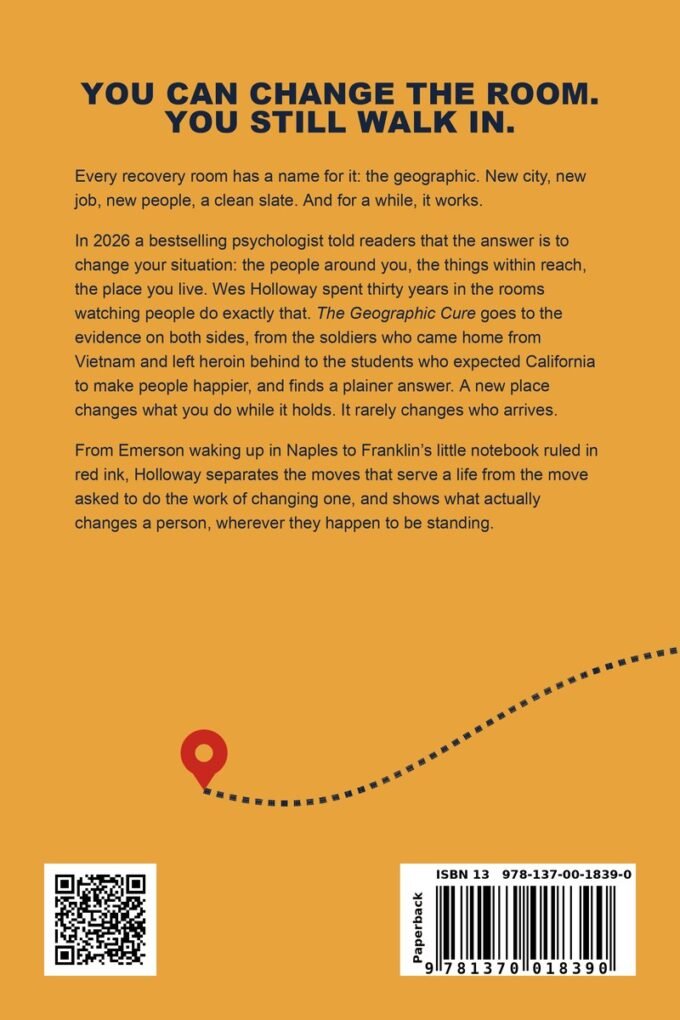
You can change the room. You still walk in.
The Geographic Cure
Why changing your people and places rarely changes you, and what does
by Wes Holloway
I pack my trunk, embrace my friends, embark on the sea and at last wake up in Naples, and there beside me is the stern fact, the sad self, unrelenting, identical, that I fled from.— Ralph Waldo Emerson, Self-Reliance, in Essays: First Series (1841)
About this book
Every recovery room has a name for it: the geographic. New city, new job, new people, a clean slate. And for a while, it works.
In 2026 a bestselling psychologist told readers that the answer is to change your situation: the people around you, the things within reach, the place you live. Wes Holloway spent thirty years in the rooms watching people do exactly that. The Geographic Cure goes to the evidence on both sides, from the soldiers who came home from Vietnam and left heroin behind to the students who expected California to make people happier, and finds a plainer answer. A new place changes what you do while it holds. It rarely changes who arrives.
From Emerson waking up in Naples to Franklin’s little notebook ruled in red ink, Holloway separates the moves that serve a life from the move asked to do the work of changing one, and shows what actually changes a person, wherever they happen to be standing.
You can change the room. You still walk in.
Contents
- Preface
- 1Pulling a Geographic
- 2People, Places and Things
- 3The Passenger
- 4The Rooms You Can’t Leave
- 5What Actually Moves
- 6Unpacking
- Bibliography
- About the Author
The covers